|
Topics
View All Conferences
|
|
Non-Traditional Lenders and the Impact of Loan-to-Own Strategies on the Restructuring Process
|
|
|
| Location:
Your office or conference room (no need to travel!) |
Date : Audio CD Available |
| Time(s): |
- Eastern Time
- Central Time
- Mountain Time
- Pacific Time
- GMT
|
Hosted By : Beard Group Law and Business Publishers |
| |
This conference will include:
Equity and hedge funds have been aggressively acquiring distressed assets through the employment of 'loan-to-own' strategies.
In a typical scenario, a fund will purchase the secured loan held by the traditional lender to a distressed company at a discount. The fund's interest in purchasing the loan is not to become a substitute lender, but rather to acquire a steppingstone to eventual ownership through a bankruptcy acquisition requiring only a modest amount of additional investment.
The fund then lines up the professionals and positions the company for bankruptcy, using its economic leverage as the new secured lender. As bankruptcy approaches, the fund becomes the DIP lender and the 'stalking horse' bidder to purchase the company under section 363 of the bankruptcy code.
Join Michael P. Richman, Partner at Foley & Lardner LLP as he examines this recent trend and the issues associated with 'loan-to-own' strategies.
In this Audio CD (recorded late July 2007), he discusses:
· Should the loan-to-own party be permitted under section 363(k) to credit bid the full face amount of the secured claim that it purchased at a discount?
· Should credit-bid rights be denied entirely in these scenarios, or limited/conditioned in some manner (e.g., limited to the discounted purchase price)?
· In these situations, should the loan-to-own party be able to use the leverage of the DIP loan to limit the scope of what professionals (particularly committees) may investigate and do to fulfill their duties under the bankruptcy code?
· Should the loan-to-own party be permitted to use the bankruptcy process to "clean-slate" its acquisition without providing any distributions to unsecured creditors?
· How would the bankruptcy process be altered if credit bid rights were denied or limited in the loan-to-own scenario? Would it be generally better or worse from the company's perspective? From the creditors' perspective?
|
| |
| Speaker(s): |
|
|
 |
-
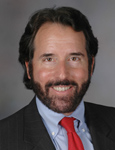
Michael P. Richman
Foley & Lardner LLP
|
Michael P. Richman is a partner with Foley & Lardner LLP and chair of its national Business Reorganizations Practice Group. He handles bankruptcy, restructurings and creditors' rights litigation, with primary emphasis upon the representation of creditors' committees and debtors, secured and unsecured creditors, bank groups and other parties in interest in contested and litigated bankruptcy cases, out-of-court workouts and restructurings and civil suits. Significant pending and recent engagements include: counsel to Official Committees of Unsecured Creditors in Centrix Financial and NewComm Telecommunications chapter 11 cases, counsel to debtor in Medifacts International chapter 11 case, and national bankruptcy counsel to Ernst & Young LLP. Prior to joining Foley in 2006, Mr. Richman was a partner with Mayer, Brown, Rowe & Maw LLP where he recently served as national bankruptcy counsel to the Center for Claims Resolution in Chapter 11 cases of asbestos producers and suppliers, and special bankruptcy counsel to Huron Consulting. He has also recently served, among other roles, as counsel to Goldin Capital in the successful acquisition of a business in a contested section 363 auction; counsel to the State of Mississippi in a $5 billion tax claim against MCI/Worldcom; counsel to Textron Financial Corporation as secured creditor in the chapter 11 cases of Leisure Industries; co-counsel to Credit Suisse First Boston in the OSI Chapter 11 cases; counsel to agent lenders (including Bank of Nova Scotia and Textron Financial Corporation) in significant out-of-court financial workouts and restructurings; counsel to Bank of Montreal in adversary proceedings to determine status as secured or unsecured of over $1 billion of debt in Loewen chapter 11 cases; counsel to Umbro Worldwide in dispute with debtor licensee and co-licensee; and counsel to GE Capital Corporation in Loews Cineplex Chapter 11 cases.
Mr. Richman earned his J.D. from Columbia University Law School (1979) where he was a Harlan Fiske Stone Scholar and was awarded the David M. Berger Memorial Award in honor of Prof. Wolfgang Friedman (International Law). He was also the managing editor of the Columbia Journal of Transnational Law. He graduated from Vassar College (A.B., 1975) where he was awarded general honors and departmental honors in political science. Mr. Richman spent a year of his undergraduate study abroad attending the London School of Economics and Political Science.
|
|
Non-Traditional Lenders and the Impact of Loan-to-Own Strategies on the Restructuring Process
|
|
| Conference Audio CD + Written Materials |
US$ |
35.00 |
add to cart |
We are proud to have the support of the following sponsors:
|
|
Add this audio conference to your
shopping cart
. Or
View your shopping cart
.
Prefer to register by phone? Call +1 (240) 629-3300 to register with your credit card.
|
|